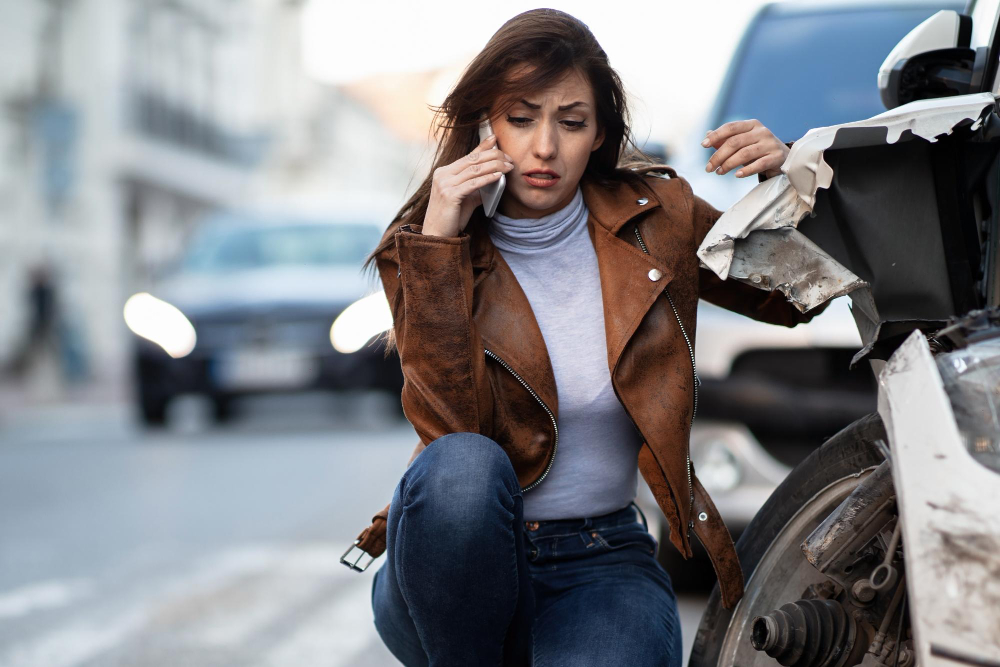
A common assumption is that if someone is involved in an accident whilst driving without a licence, that accident is automatically their fault. This assumption is incorrect. Although driving without a licence is not permitted and is considered an unlawful act, this does not mean that the driver without a licence is, by definition, fully liable for the accident. When assessing the case, all the circumstances must always be taken into account.
Not having a driving licence does not automatically mean you cannot drive
The absence of a driving licence does not in itself say anything about a driver’s ability to drive. Consider, for example, a minor who is technically capable of driving a motor vehicle but is not yet permitted to hold a driving licence due to their age. If such a person is involved in an accident, this does not automatically mean that the accident was caused by their actions. A driving licence is merely one of the factors taken into account when assessing liability.
Circumstances of the accident involving driving without a licence
In the event of an accident involving a driver without a driving licence, the focus is on the circumstances of the incident. The driving behaviour of all parties involved and the circumstances under which the accident occurred are examined. If the accident is (partly) caused by the conduct of the other party, that party may be held liable for the damage.
This applies not only to car accidents, but also to situations involving accidents where a scooter is being ridden without a licence. In the case of a scooter accident involving a rider without a licence, the other party may also be liable, for example if they fail to give way or commit a traffic offence.
The insurer’s role in the event of an accident involving a driver without a licence
Insurers may not automatically reject liability on the grounds that the driver did not hold a driving licence. Case law establishes that an insurer may not completely refuse liability solely because the driver did not hold a driving licence. The absence of a driving licence is merely one of the factors taken into account when assessing liability.
It is necessary to assess the extent to which the driving behaviour of the driver without a licence actually contributed to the accident. Only on that basis can it be determined whether, and to what extent, compensation is payable.
Equity adjustment and apportionment of damages
In addition to the assessment of liability, the so-called equity adjustment may also come into play. This adjustment means that the damages are apportioned differently from a strict fault-based approach, where the circumstances so warrant. This may be the case where both parties have made mistakes that contributed to the accident.
For example, in the case of a specific manoeuvre where no right of way is granted, a 70/30 apportionment of liability may be applied. In such cases, 70% of the damages incurred by the driver without a licence will be compensated. The fact that this driver was driving without a licence does not automatically mean that he or she is not entitled to compensation.
However, the equity adjustment may also result in a different allocation. Depending on the severity of the injury, the loss of earning capacity and the extent to which the driver without a licence contributed to the accident, it may be deemed that a different apportionment of liability is justified; in exceptional cases, this may even amount to 100%. Whether this is the case depends on the specific facts and circumstances.
No fixed rules; each case is assessed individually
The question of whether a person is entitled to compensation following an accident while driving without a licence cannot be answered in general terms. This area of law is highly case-dependent. There is no fixed rule stating that the absence of a driving licence automatically leads to full liability or the forfeiture of compensation.
Every case requires careful consideration, taking into account all relevant facts and circumstances.
Have you been involved in an accident involving driving without a licence, or do you know someone who has been involved in such an accident? Please feel free to contact us. We would be happy to assess whether there is a case for liability and a right to compensation in your situation.